Jackson County was major jumping off point for western migration
Published on May 28, 2026
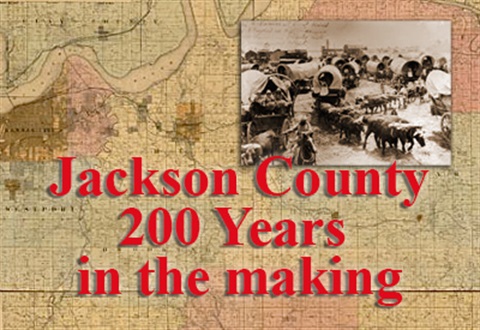
Jackson County is celebrating its rich history during its Bicentennial in 2026.
Throughout the 19th century, especially the 1840s, settlers emigrating west built overland trails as they moved their homes further west via routes such as the Oregon, California, Mormon and Santa Fe trails. An estimated 500,000 emigrants used the trails between 1843 and 1869.
Those pioneers joined thousands of wagon trains facing great danger as they made their way along rugged trails, across open prairies, deserts and steep mountain ranges. Most walked beside their covered wagon being pulled by oxen and mules covering 10-20 miles a day.
Most wagon trains started in April from “jumping-off” points to ensure they reached the West Coast before winter snow. The principal jumping-off point for the three western trails was Independence, Missouri.
Steamboats loaded with people and goods traveled up the Missouri River to landings at Independence and Westport. With little commercial competition on the frontier, the area dominated as the place for trail outfitting. Tens of thousands of fur trappers, traders, emigrants and gold seekers from all over the world traveled through Jackson County seeking a new life in the West.
During this time, the frontier village of only a few hundred people on the edge of American civilization quickly expanded as it became the eastern point for the Santa Fe Trail and then as an outfitting post for those heading to Oregon and California.
“It is to this beautiful spot, already grown up to be a thriving town, that the prairie adventurer, whether in search of wealth, health, or amusement, [comes], about the first of May…they purchase their provisions for the road, and many of their mules, oxen, and even some of their wagons—in short, load all their vehicles, and make their final preparations for a journey across the prairie wilderness.” - Commerce of the Prairies, Josiah Gregg, 1844.
Goods that were made in the East were being transported to Santa Fe and those goods made in Mexico were sent back to Independence along with gold and silver via the 800-mile-long Santa Fe trail which began in 1821.
Travelers migrating west bought supplies for the six-month, 2,000-mile trek along the Oregon and California trails. Every spring the area was covered by thousands of emigrants. Everything they needed could be found there: tools, food, wagons, and animals were for sale. In 1850, it cost roughly $800 to $1,200 to purchase a proper outfit and get by for a year without harvesting a crop.
Favorite pieces of furniture were left behind to make room for plows, seeds, food, tools, and other necessities. Many said farewell to their families for the last time as they set off on their journey.
Life on the trail was not easy and brought severe hardships for the settlers, including disease, extreme weather and difficult river crossings.
Days began around 4 a.m. with a midday break to rest the animals and a quick meal. They would stop early evening to set up camp, fetch water, gather fuel for the fire, and cook a warm repetitive dinner. Food consisted of durable staples like flour, bacon, beans and coffee supplemented by fresh game and foraged plants.
Disease was the number one killer during the journey with between 20,000 and 30,000, nearly 1 in 10, dying along the way mostly from cholera caused by contaminated water and poor hygiene.
Despite the difficulties settlers pushed on in search of new opportunities, free land and gold.
The completion of the Transcontinental Railroad in 1869 effectively ended the era of cross-country-country wagon trains. Traveling west on the trails could take months, be dangerous and expensive. The same trip on the railroad was much safer and took just seven days. The shift from wagons to rail drastically lowered travel costs and expanded the American economy.